
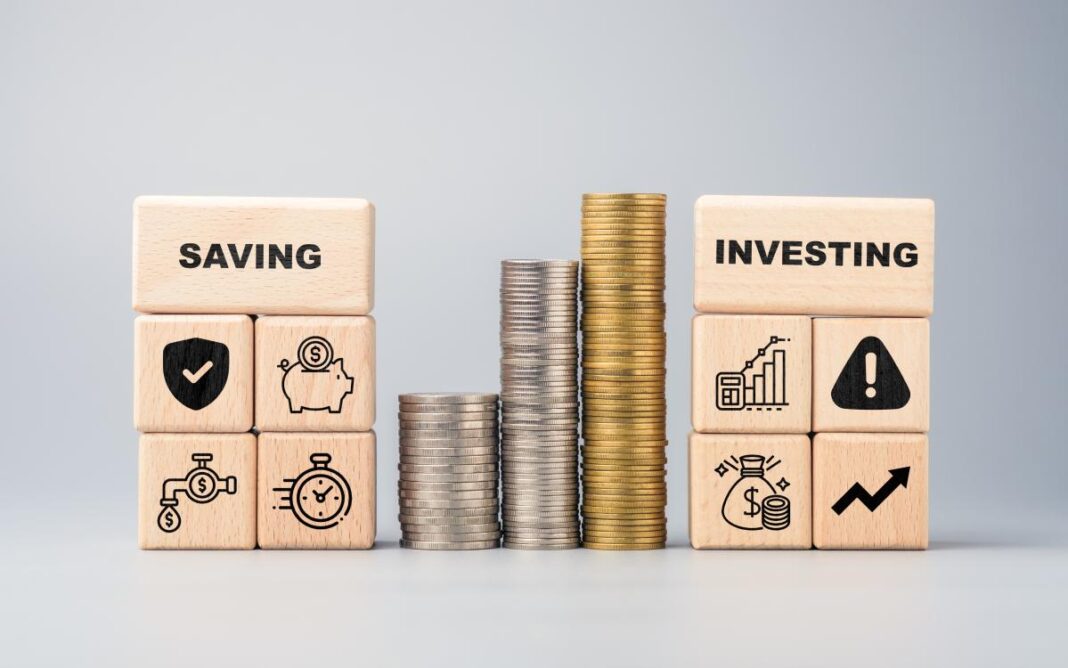
Managing personal finances effectively requires a clear understanding of when to save and when to invest. While both approaches aim to secure your financial future, they serve different purposes and carry distinct levels of risk and returns. For individuals in India, knowing the difference between saving and investing is essential for achieving short-term goals like emergency funds and long-term goals such as retirement or buying property. Making informed choices ensures financial stability and growth.
What is Saving?
Saving is the practice of setting aside a portion of your income for future use. In India, common saving options include savings accounts, fixed deposits, recurring deposits, and post office schemes. The primary objective of saving is capital preservation and liquidity, meaning your money is safe and easily accessible. Savings are suitable for short-term goals, emergency funds, or situations where you might need immediate access to cash without facing market risks.
What is Investing?
Investing involves putting money into financial instruments or assets with the expectation of generating returns over time. Investment options in India include mutual funds, equities, bonds, real estate, and government schemes like the Public Provident Fund or National Pension System. Unlike saving, investing carries a higher risk but also offers the potential for higher returns. Investments are generally aligned with long-term goals, such as funding children’s education, retirement planning, or wealth creation.
Key Differences Between Saving and Investing
Understanding the distinction between saving and investing can help in making better financial decisions. Savings focus on security, low risk, and liquidity, whereas investing emphasises wealth growth, moderate to high risk, and long-term objectives. Returns from savings are predictable but usually lower, such as interest earned in a savings account or fixed deposit. Investments, on the other hand, are subject to market fluctuations but can offer exponential growth if managed wisely.
When to Choose Saving
Saving is ideal when you need financial security and easy access to money. For example, creating an emergency fund of three to six months of living expenses in a liquid instrument like a savings account or fixed deposit is a prudent choice. Savings are also suitable for short-term goals, such as planning a family vacation, buying a vehicle, or covering medical expenses. In these cases, the focus should be on preserving capital rather than earning high returns.
When to Choose Investing
Investing is appropriate when your financial goals are long-term and you are comfortable with taking calculated risks. In India, individuals looking to accumulate wealth over several years can explore options like equity mutual funds, direct stocks, bonds, or real estate. Investments allow your money to grow at a rate that can outpace inflation, ensuring your purchasing power is maintained or increased over time. It is crucial to align investment choices with risk tolerance, investment horizon, and specific financial objectives.
Combining Saving and Investing
A balanced financial strategy in India involves both saving and investing. While savings provide a safety net and immediate liquidity, investments drive wealth creation for long-term goals. For instance, an individual may maintain a fixed deposit as an emergency fund while investing in equity mutual funds or PPF for retirement. This approach ensures that immediate financial needs are met without compromising on future wealth accumulation.
Factors to Consider Before Making a Decision
Before choosing to save or invest, consider factors such as financial goals, risk appetite, time horizon, and market conditions. Short-term goals and low risk tolerance favour savings, while long-term ambitions and higher risk tolerance support investments. Tax implications are also important in India, as savings and investment instruments are subject to different tax treatments. Fixed deposits, PPF, and NPS offer tax benefits under Section 80C, while capital gains from equities and mutual funds are taxed differently depending on the holding period.
Conclusion
Understanding the difference between saving and investing is crucial for effective financial planning in India. Savings offer safety and liquidity for short-term needs, whereas investments provide the potential for long-term wealth creation. A thoughtful combination of both strategies, tailored to individual financial goals and risk tolerance, can help build a secure and prosperous financial future. Making informed choices today ensures that your money works efficiently for you tomorrow.